
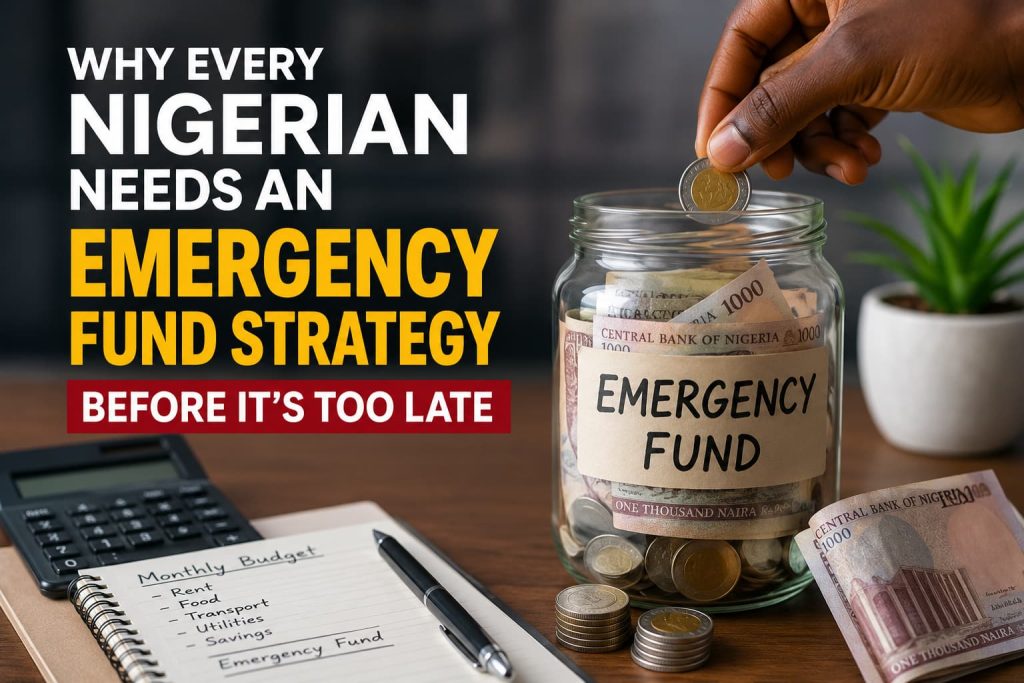
The hidden reason an Emergency Fund Strategy in Nigeria is essential cannot be overstated. In this article, you’ll discover 7 smart reasons why building an emergency fund is crucial for protecting your financial future, navigating economic uncertainties, and achieving greater financial stability in present-day Nigeria.
Unexpected expenses can happen at any time, and without proper preparation, they can disrupt even the best financial plans. An Emergency Fund Strategy helps Nigerians prepare for life’s uncertainties by creating a financial safety net that reduces stress, prevents unnecessary debt, and supports long-term financial stability.
Build wealth with wisdom and purpose.
Discover The Biblical Wealth Code and learn practical biblical principles for managing money, developing financial discipline, and building a purposeful financial life.
Get Your Copy
What Is an Emergency Fund Strategy?
An Emergency Fund Strategy is a structured plan for consistently saving money that is reserved exclusively for genuine emergencies rather than everyday spending or planned purchases.
Instead of relying on loans, borrowing from friends, or selling valuable assets during difficult times, an emergency fund provides immediate financial support when unexpected situations arise.
Examples include:
• Medical emergencies
• Sudden job loss
• Business slowdown
• Urgent home repairs
• Vehicle repairs
• Family emergencies
• Unexpected school expenses
The goal is not simply to save money but to create a disciplined system that protects your financial future.
Why Is an Emergency Fund Especially Important in Nigeria?
Nigeria’s economic environment can present challenges such as:
• Inflation affecting purchasing power
• Unexpected increases in living expenses
• Irregular income for entrepreneurs and freelancers
• Rising transportation costs
• Medical expenses
• Employment uncertainty
Tracking changes in prices and household expenses is important when determining how much to save. The National Bureau of Statistics (NBS) provides official Nigerian economic and socioeconomic statistics.
Because of these realities, depending solely on monthly income can leave individuals financially vulnerable.
An emergency fund acts as a financial cushion that helps absorb these shocks without disrupting long-term goals.
Now, let’s examine the top 7 Reasons Why Having an Emergency Fund Strategy in Nigeria Is Essential
1. It Protects You from Unexpected Financial Emergencies
Life rarely follows a perfect plan.
Imagine:
• Your generator suddenly breaks down.
• Your car requires urgent repairs.
• A family member needs emergency medical attention.
• Your business equipment stops working.
Without savings, these situations may force you into borrowing money at unfavorable terms.
With an emergency fund, you already have resources available to manage the situation.
Practical Example
Suppose your monthly salary is ₦250,000 and your refrigerator suddenly fails, requiring ₦180,000 for replacement.
Without savings:
• Borrow money
• Delay payment of bills
• Use high-interest credit
• Sell investments
With an emergency fund:
• Pay the expense
• Continue meeting other obligations
• Avoid financial panic
2. It Helps You Avoid High-Interest Debt
Many financial problems begin with emergency borrowing rather than ordinary spending.
Unexpected expenses often lead people to:
• Borrow from informal lenders
• Use expensive short-term loans
• Accumulate unnecessary debt
These obligations can become difficult to repay and may create long-term financial pressure.
An effective Emergency Fund Strategy reduces dependence on borrowing by providing cash when you need it most.
Why this matters
Instead of paying interest on emergency loans, you can preserve your income for:
• Investments
• Education
• Business opportunities
• Family needs
Your savings work as your first line of financial defense.
3. It Reduces Financial Stress and Improves Decision-Making
Building an emergency fund is easier when you develop consistent saving habits and control unnecessary spending. These financial discipline tips can help you manage your money, strengthen your savings habits, and prepare for unexpected expenses.
Money-related anxiety affects many households.
When every unexpected expense becomes a crisis, decision-making often becomes emotional rather than rational.
An emergency fund provides confidence because you know you have a backup plan.
Building an emergency fund is not only about saving money; it also requires the right financial perspective. This wealth mindset shift can help you think long term, prioritize financial security, and make smarter decisions with your money.
Benefits include:
• Better sleep
• Less financial anxiety
• Improved budgeting
• Greater confidence
• Better long-term planning
Financial security is not determined only by income—it is also influenced by preparation.
4. It Prevents You From Disrupting Long-Term Financial Goals
Many people save for:
• Buying land
• Starting a business
• Children’s education
• Retirement
• Investments
Without emergency savings, unexpected expenses often force people to withdraw money intended for these goals.
For example:
You save ₦1,500,000 for a business startup.
A medical emergency costs ₦600,000.
Without an emergency fund, your business capital decreases significantly, delaying your plans.
A dedicated emergency fund protects your long-term objectives by covering unexpected costs separately.
5. It Provides Stability During Income Disruptions
Income is not always predictable.
Business owners may experience slow sales.
Freelancers may lose clients.
Employees may face layoffs or delayed salaries.
An emergency fund helps bridge these periods while allowing you to continue paying for essentials such as:
• Food
• Rent
• Transportation
• Utilities
• Children’s education
Instead of making rushed financial decisions, you gain valuable time to recover and plan your next steps.
Key Takeaways So Far:
• An Emergency Fund Strategy is a structured plan for saving money for genuine emergencies.
• It protects against unexpected expenses and income disruptions.
• It reduces reliance on borrowing.
• It helps preserve long-term financial goals.
• It improves financial confidence and stability.
6. It Gives You the Freedom to Make Better Financial Decisions
When people have no financial cushion, they often make decisions based on urgency rather than strategy. They may accept unfavorable loan terms, sell valuable assets at a loss, or abandon long-term plans simply to solve an immediate problem.
An effective Emergency Fund Strategy gives you time and flexibility to evaluate your options.
How this helps
Instead of reacting impulsively, you can:
• Compare financial solutions before making a decision.
• Continue paying essential bills while searching for a new income source.
• Avoid selling investments or business assets prematurely.
• Focus on solving the problem rather than worrying about how to pay for it.
Practical Example
Imagine you own a small tailoring business, and your sewing machine suddenly develops a major fault.
Without emergency savings, you may:
• Borrow money at a high interest rate.
• Stop operations for several weeks.
• Lose customers due to delays.
With an emergency fund, you can repair or replace the machine quickly and continue serving clients with minimal interruption.
7. It Builds Long-Term Financial Discipline
One of the greatest benefits of an emergency fund is that it develops the habit of consistent saving.
Saving regularly teaches:
• Patience
• Self-control
• Budgeting skills
• Goal setting
• Financial responsibility
Over time, these habits extend beyond emergency savings and improve your overall financial management.
People who successfully maintain emergency funds are often better prepared to:
• Invest wisely
• Plan for retirement
• Save for education
• Purchase a home
• Grow a business
An emergency fund is therefore not just money set aside—it is a foundation for healthier financial habits.
How Much Should Your Emergency Fund Be?
There is no single amount that works for everyone. The ideal size depends on your income, expenses, and financial responsibilities.
A practical guideline is to save enough to cover three to six months of essential living expenses.
Example
Suppose your monthly essential expenses are:
• Rent: ₦120,000
• Food: ₦80,000
• Transportation: ₦40,000
• Utilities: ₦30,000
• Other necessities: ₦30,000
Total monthly essentials = ₦300,000
Your target emergency fund could be:
• Three months: ₦900,000
• Six months: ₦1,800,000
If these amounts seem large, remember that consistency matters more than speed. Building the fund gradually is still meaningful progress.
How to Build an Emergency Fund Strategy Step by Step
Step 1: Calculate Your Essential Monthly Expenses
List only necessary costs such as:
• Housing
• Food
• Transportation
• Utilities
• Healthcare
• Education obligations
This gives you a realistic savings target.
Step 2: Set a Specific Goal
Instead of saying:
“I want to save money.”
Create a measurable objective such as:
“I want to save ₦600,000 over the next 12 months for emergencies.”
Specific goals improve motivation and tracking.
Step 3: Create a Monthly Savings Plan
Determine a realistic amount you can save consistently.
For example:
• ₦5,000 weekly
• ₦10,000 biweekly
• ₦20,000 monthly
Even modest contributions accumulate over time through consistency.
Step 4: Treat Savings Like a Fixed Expense
Many people save only after spending, leaving little or nothing at the end of the month.
A better approach is to include savings in your budget alongside essential bills.
Think of it as paying your future self-first.
Step 5: Separate Your Emergency Fund From Daily Spending
Keeping emergency savings mixed with everyday spending increases the temptation to use it for non-essential purchases.
Consider maintaining a dedicated savings account or other secure location specifically for emergencies.
The easier it is to distinguish this money from your regular spending, the more likely it is to remain untouched until truly needed.
Step 6: Review and Increase Your Savings Periodically
As your income grows or your responsibilities change, revisit your emergency fund target.
You may need to increase your savings if:
• Your family expands.
• Your rent increases.
• You start a business.
• Your monthly expenses rise.
Updating your strategy helps ensure your emergency fund remains adequate.
Where Should You Keep Your Emergency Fund?
An emergency fund should balance accessibility and security. The goal is to have money available when needed while reducing the temptation to spend it impulsively.
Suitable options may include:
• A dedicated savings account
• A regulated financial institution
• A secure account separate from everyday transactions
Avoid keeping your entire emergency fund:
• As physical cash at home
• In speculative investments that fluctuate significantly
• In assets that may be difficult to convert quickly during an emergency
Your emergency fund should prioritize availability and preservation rather than maximizing returns.
Common Mistakes to Avoid
Many people start saving enthusiastically but unintentionally weaken their emergency fund through avoidable mistakes.
1. Using It for Non-Emergencies
Examples include:
• Vacations
• Luxury purchases
• Entertainment
• Fashion items
• Holiday shopping
An emergency fund is intended for genuine unexpected financial needs.
2. Waiting Until You Earn More
Some people believe they will begin saving only after receiving a salary increase.
In reality, the habit of saving often matters more than the size of the income.
Starting small is better than postponing indefinitely.
3. Setting Unrealistic Targets
Trying to save an amount beyond your current capacity can lead to frustration.
Choose a target that challenges you while remaining achievable.
Consistency builds momentum.
4. Stopping Contributions After Reaching Your Goal
Emergencies reduce your savings balance.
Whenever you use part of the fund for a legitimate emergency, create a plan to replenish it over time.
An emergency fund should be maintained, not viewed as a one-time project.
5. Ignoring Inflation and Lifestyle Changes
As prices rise and financial responsibilities increase, the amount that once seemed sufficient may no longer provide adequate protection.
Review your emergency fund periodically and adjust it when necessary.
Practical Action Plan
You can begin building your Emergency Fund Strategy today by following these simple steps:
1. Calculate your monthly essential expenses.
2. Decide on a target amount based on three to six months of expenses.
3. Create a monthly savings goal that fits your budget.
4. Keep the fund separate from everyday spending.
5. Review your progress every month.
6. Replenish the fund whenever it is used for genuine emergencies.
7. Increase your target as your financial responsibilities grow.
Small, consistent actions today can create greater financial resilience in the future.
Real-World Scenario
Consider two individuals with similar incomes.
Person A:
• Has no emergency savings.
• Faces an unexpected medical expense.
• Borrows money and struggles to repay it.
• Delays other financial goals.
Person B:
• Has followed an Emergency Fund Strategy for several months.
• Uses emergency savings to cover the expense.
• Continues paying regular bills.
• Maintains progress toward long-term financial goals.
The difference is not necessarily income—it is preparation.
An emergency fund cannot prevent unexpected events, but it can reduce their financial impact and help you recover more effectively.
Key Takeaways:
• An Emergency Fund Strategy provides financial protection against unexpected expenses.
• It helps reduce dependence on borrowing during emergencies.
• Consistent saving is often more important than saving large amounts at once.
• Separating emergency savings from daily spending improves financial discipline.
• Reviewing and adjusting your emergency fund periodically ensures it remains effective.
• Building an emergency fund supports long-term financial stability and better decision-making.
Actionable Steps You Can Take Today
Today:
• Calculate your monthly essential expenses.
• Decide on an initial emergency savings target.
• Create a simple monthly savings plan.
This Week:
• Open or designate a separate account for emergency savings.
• Automate or schedule regular contributions if possible.
• Review your budget to identify unnecessary expenses you can reduce.
This Month:
• Track your progress.
• Celebrate consistency rather than perfection.
• Adjust your savings amount if your financial situation changes.
Small actions taken consistently often produce meaningful long-term results.
Frequently Asked Questions (FAQs)
1. What is an Emergency Fund Strategy?
An Emergency Fund Strategy is a structured plan for setting aside money specifically for unexpected financial situations such as medical emergencies, job loss, urgent home repairs, or unforeseen family expenses. The goal is to protect your finances without relying on debt.
2. How much should I save in an emergency fund in Nigeria?
A common recommendation is to save three to six months of essential living expenses. However, if that amount feels overwhelming, start with a smaller goal such as one month’s expenses and build consistently over time.
3. Where should I keep my emergency fund?
Your emergency fund should be kept in a secure and easily accessible account that is separate from your everyday spending money. The priority is safety and liquidity rather than pursuing high investment returns.
4. Is an emergency fund different from an investment?
Yes.
An emergency fund is designed to provide quick access to cash during unexpected situations. Investments are generally intended for long-term growth and may fluctuate in value or require time to access.
Keeping these two financial goals separate helps protect both.
5. Can low-income earners build an emergency fund?
Absolutely.
Building an emergency fund is more about consistency than income level. Saving even a small amount regularly can gradually create a meaningful financial cushion.
For example:
• Save ₦2,000 weekly
• Save ₦5,000 biweekly
• Save ₦10,000 monthly
Over time, these contributions accumulate into valuable emergency savings.
6. What should NOT be considered an emergency?
An emergency fund should generally not be used for:
• Vacations
• Luxury purchases
• New gadgets
• Holiday shopping
• Entertainment expenses
• Planned celebrations
It should be reserved for genuine, unexpected financial needs.
7. Should I continue saving after reaching my target?
Yes, your financial responsibilities and living costs may change over time. In addition, if you use part of your emergency fund for a legitimate emergency, you should work toward replenishing it to maintain your financial safety net.
8. How do I start an emergency fund if I have a small income?
Start with an amount you can save consistently without compromising essential expenses. Even ₦1,000, ₦2,000, or ₦5,000 regularly can help you develop the habit of saving.
The important thing is to establish a sustainable Emergency Fund Strategy and gradually increase your contributions as your income improves.
9. Should I keep my emergency fund in cash or in a bank account?
A dedicated savings account is generally more practical than keeping a large amount of cash at home. A suitable account should provide reasonable accessibility while keeping the money separate from your everyday spending.
Keeping excessive physical cash at home may expose your savings to theft, loss, or accidental spending.
10. Can I use my emergency fund for rent?
Generally, rent should be included in your normal financial planning rather than treated as an emergency expense if the payment is predictable and expected.
However, if an unexpected loss of income makes it impossible to meet an essential housing obligation, using part of your emergency fund may be reasonable. If you do so, prioritize replenishing the fund afterward.
Conclusion
An effective Emergency Fund Strategy is not about predicting every financial challenge—it is about preparing responsibly for life’s uncertainties. Whether you are an employee, entrepreneur, freelancer, or student, having emergency savings can reduce financial stress, protect your long-term goals, and improve your ability to make sound decisions during difficult times.
Building an emergency fund does not require perfection or a high income. It requires commitment, consistency, and a clear plan. By starting today and contributing regularly, you can create a stronger financial foundation that supports both your present needs and your future aspirations.
Take your financial concerns to God.
7 Keys to Breaking Financial Limitations — 7 Midnight Prayers gives you seven focused midnight prayers for seeking God’s wisdom, direction, and intervention in your financial journey.
Get a Copy Now

Joy, also known as MindsetCoach, is the publisher and personal finance educator behind WealthMindset.com.ng, a Nigerian platform dedicated to practical money management and wealth-building education. She writes about budgeting, saving, financial literacy, debt management, investing, income growth, and building healthier financial habits. Through clear, practical, and evidence-informed content, Joy helps readers understand their money, make smarter financial decisions, and develop a wealth-building mindset suited to real-life financial challenges in Nigeria.